
John Z Black
Brunswick, ME • (207) 245-1010 • contact@johnzblack.com
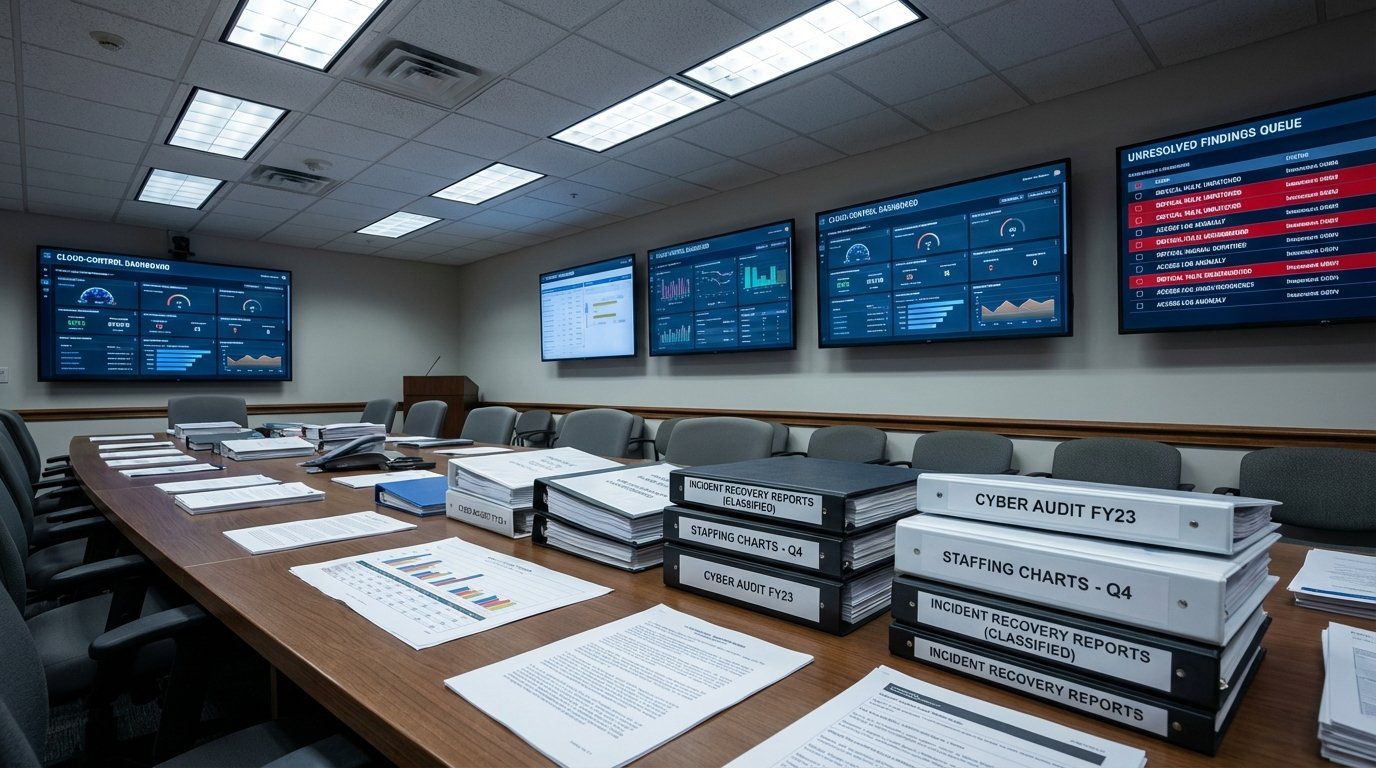
Most FedRAMP debates get stuck in a loop asking whether the framework succeeded or failed. That’s not quite the right question.
The first question should be whether the institutions behind cloud assurance have enough staffing, clear enough authority, and enough operational depth to enforce controls continuously.
Four signals sharpened that this week. ProPublica raised concerns about how assurance discussions played out around major cloud authorizations. Congressional questioning around DHS leadership revived concern over CISA staffing depth. CISA officials continue discussing flexible sector-leadership models for critical-infrastructure response. And SEC incident-filing analysis suggests recovery quality is often uneven long after disclosure.
Different sources, same warning: paperwork confidence and operational confidence aren’t the same thing.
Frameworks set expectations. Institutions make them real. If the enforcing side is under-resourced or operating with unclear authority, assurance quality drifts. That drift usually shows up in three places: validation depth during authorization, follow-through speed once weaknesses are found, and recovery oversight after incidents stress-test the controls.
A certification can be accurate at a point in time and still be a poor proxy for sustained security performance. Both can be true at once.
So use assurance claims as one input, not the final verdict. For critical vendors and platforms, ask for evidence of continuous control validation, clear enforcement ownership, adequate staffing, and measurable recovery performance under real pressure.
Trust should follow demonstrated execution, not framework branding alone.