
John Z Black
Brunswick, ME • (207) 245-1010 • contact@johnzblack.com
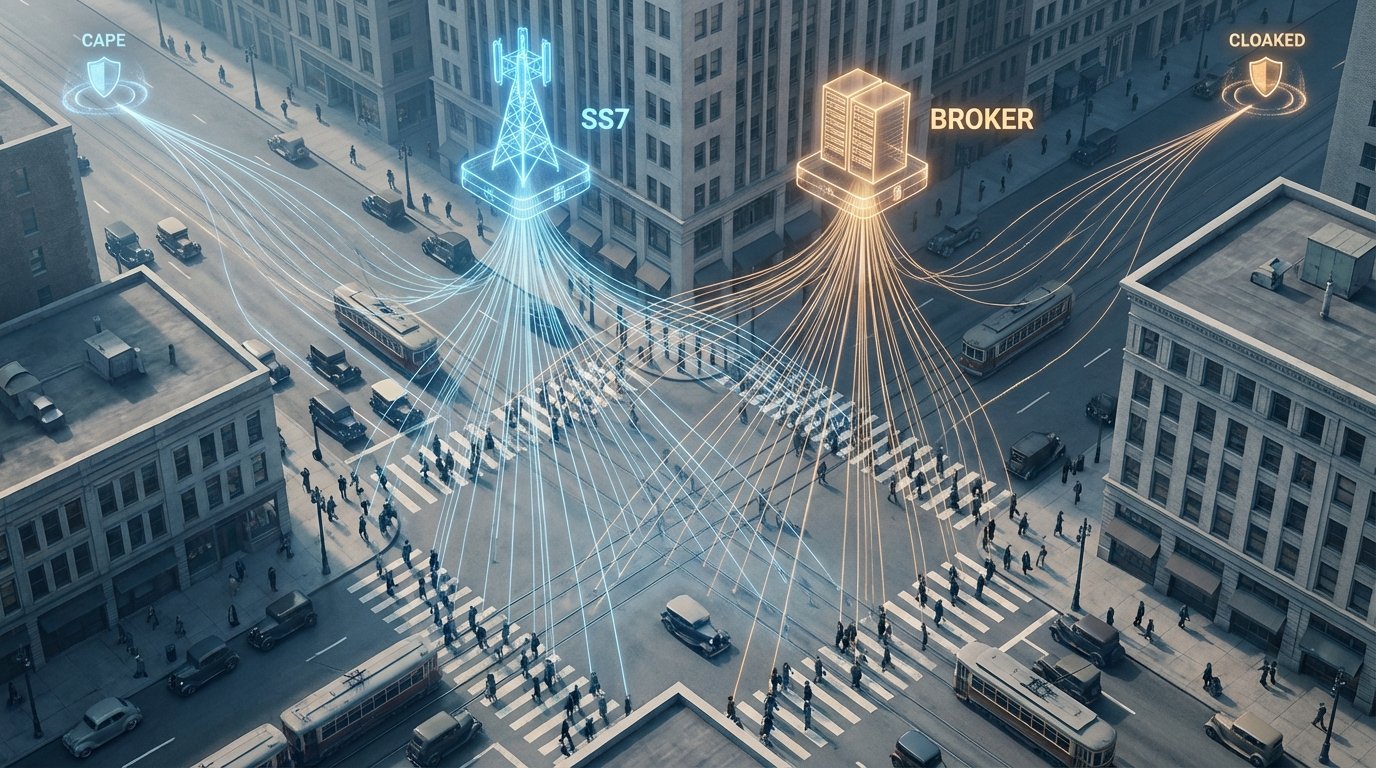
Two privacy startups raised a combined $475 million this week. Congratulations to them. Also: this is embarrassing for everyone who was supposed to fix this first.
Cape raised $100 million to operate as a privacy-focused mobile virtual network operator. The pitch is that your current carrier is functionally part of the surveillance infrastructure. Stingray devices can impersonate cell towers and intercept your location and communications. SS7, the signaling protocol routing calls and texts globally, was designed in 1975 with essentially no authentication. Anyone with SS7 access – and a disturbingly wide range of state and non-state actors have it – can query your location in real time.
Your carrier has known about this for decades. The FCC’s response could be charitably described as slow. So Cape built a different network at the infrastructure level, not the app layer, specifically designed to block these attack vectors.
Cloaked raised $375 million on a simpler thesis: your real phone number and email are already compromised, data brokers have sold your information hundreds of times, and the only practical response is generating functional fake identities for each service you interact with. Now it’s expanding from consumer to enterprise, which makes sense at scale.
Put both together and you have a picture of where privacy protection is heading. From niche concern to genuine product category with consumer and enterprise demand.
That’s good, in the sense that tools exist. But it’s also a measurement of regulatory and industry failure. SS7 is not a hard problem to understand. Modern protocols exist. Enforcement exists. The data broker industry has been regulated in several states with real effect. None of it moved fast enough to make Cape or Cloaked unnecessary.
Instead, we’re in a market-response phase. Infrastructure is broken, regulators are slow, startups sell you the workaround. It works, roughly. But privacy is becoming something you pay for individually rather than something built into the systems you’re already paying for.
The people most exposed to surveillance often can’t afford the workaround. That asymmetry is worth keeping in mind while the funding rounds get celebrated.
Use the tools if they fit your threat model. Just notice what building a $475 million industry around basic privacy tells you about everything that came before.