
John Z Black
Brunswick, ME • (207) 245-1010 • contact@johnzblack.com
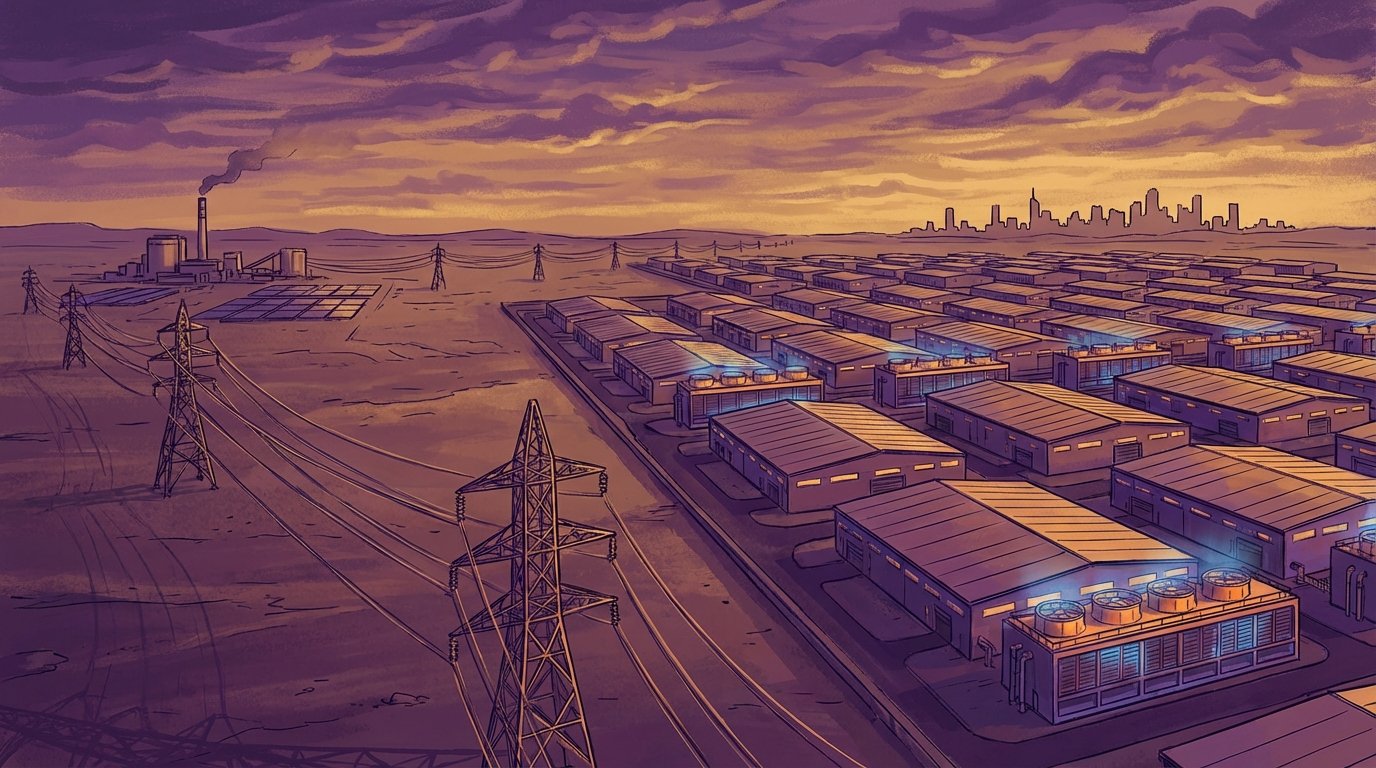
Bernie Sanders and Alexandria Ocasio-Cortez introduced the Artificial Intelligence Data Center Moratorium Act on March 25. It would halt all new AI datacenter construction in the US – not just large ones, not just poorly sited ones, all of them – until Congress passes federal AI regulation governing energy costs and environmental effects.
It won’t pass. But before you dismiss it, the numbers it’s pointing at are real.
AI datacenters consumed roughly 460 TWh of electricity globally in 2022. The IEA projects that figure will at least double by 2026. Goldman Sachs put datacenter power demand growth at around 160% by 2030. Neither the IEA nor Goldman Sachs are known for activist math. The grid strain is real, and it’s happening at a pace the US grid wasn’t designed for.
The unlock condition on this bill is the problem. Construction can resume when Congress passes “federal laws to regulate AI and associated energy costs and environmental effects.” There’s no technical threshold, no efficiency benchmark. The freeze lifts when a second piece of legislation passes, one that doesn’t exist yet and hasn’t started moving through either chamber. That’s a very high bar, and it’s clearly intentional.
The bill has no co-sponsors. It currently has no formal bill number. It got covered anyway, because the names are the point. What legislation like this actually does is set the terms for the next fight. When someone proposes something more modest – siting requirements, energy disclosure rules – they’re negotiating on terrain this bill helped define.
The tech industry will say China. Environmental groups will say the grid. Neither side is wrong about their specific facts. Nobody has a plan that resolves both at once.
Why a bill that can’t pass still matters, and what the energy numbers behind it actually say.