
John Z Black
Brunswick, ME • (207) 245-1010 • contact@johnzblack.com
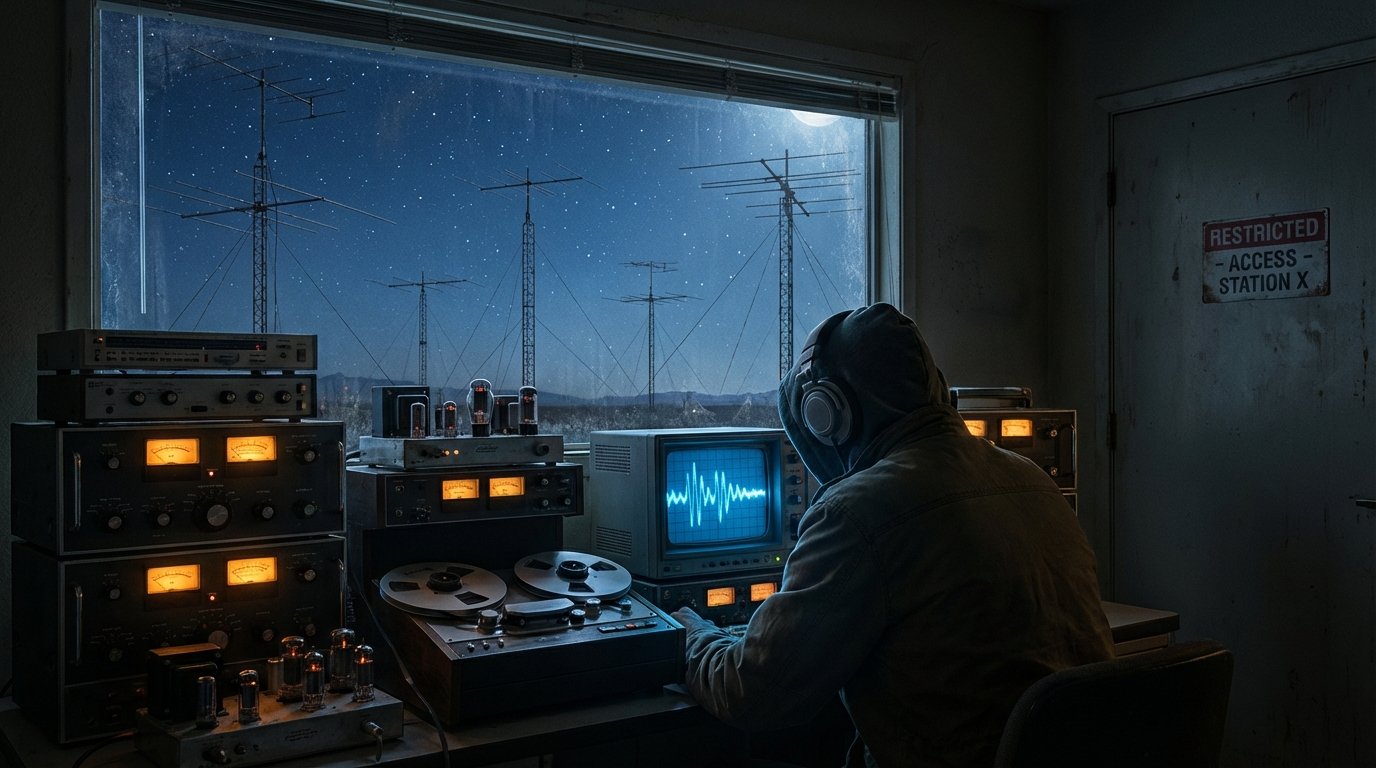
Tune a shortwave radio to 7910 kHz at 02:00 UTC or 18:00 UTC. You’ll hear a voice in Farsi say “Attention!” then read out a sequence of numbers. Then silence. Tomorrow it does it again.
This has been happening every single day since February 28, 2026 – the same day US and Israeli forces began strikes on Iran.
Numbers stations are old technology and that’s exactly why they keep showing up. A one-way shortwave broadcast is nearly impossible to trace back to the intended recipient. The signal goes out, anyone can hear it, but only the person with the right codebook knows what the numbers mean. No return signal. The listener is untraceable. The channel is inherently deniable. It worked in World War I and it still works.
Researchers at Priyom, an organization that tracks shortwave signals globally, have been documenting this one. They’ve designated it V32. Using signal triangulation, their analysis suggests the broadcast originates from the direction of Ramstein Air Base in Germany. That’s a researcher conclusion from radio analysis, not a government admission. “Traced toward” is different from confirmed. But Ramstein is a major US military installation and one of the most significant American command hubs in Europe. A Farsi-language numbers station appearing the morning Iran strikes began, pointing in that direction: the pieces don’t require much assembly.
Nobody official is saying anything about V32. That silence is, itself, somewhat informative.
The strange part is that this isn’t actually secret. Amateur radio enthusiasts are tuning in. OSINT researchers are logging every transmission. Priyom is publishing what it finds. The content is still encrypted in the number sequences, but the existence and schedule of V32 are publicly documented. Cold War infrastructure never went away. It just sat quiet between conflicts.
You can listen right now. If you don’t have hardware, WebSDR gives you browser access to publicly available shortwave receivers.