
John Z Black
Brunswick, ME • (207) 245-1010 • contact@johnzblack.com
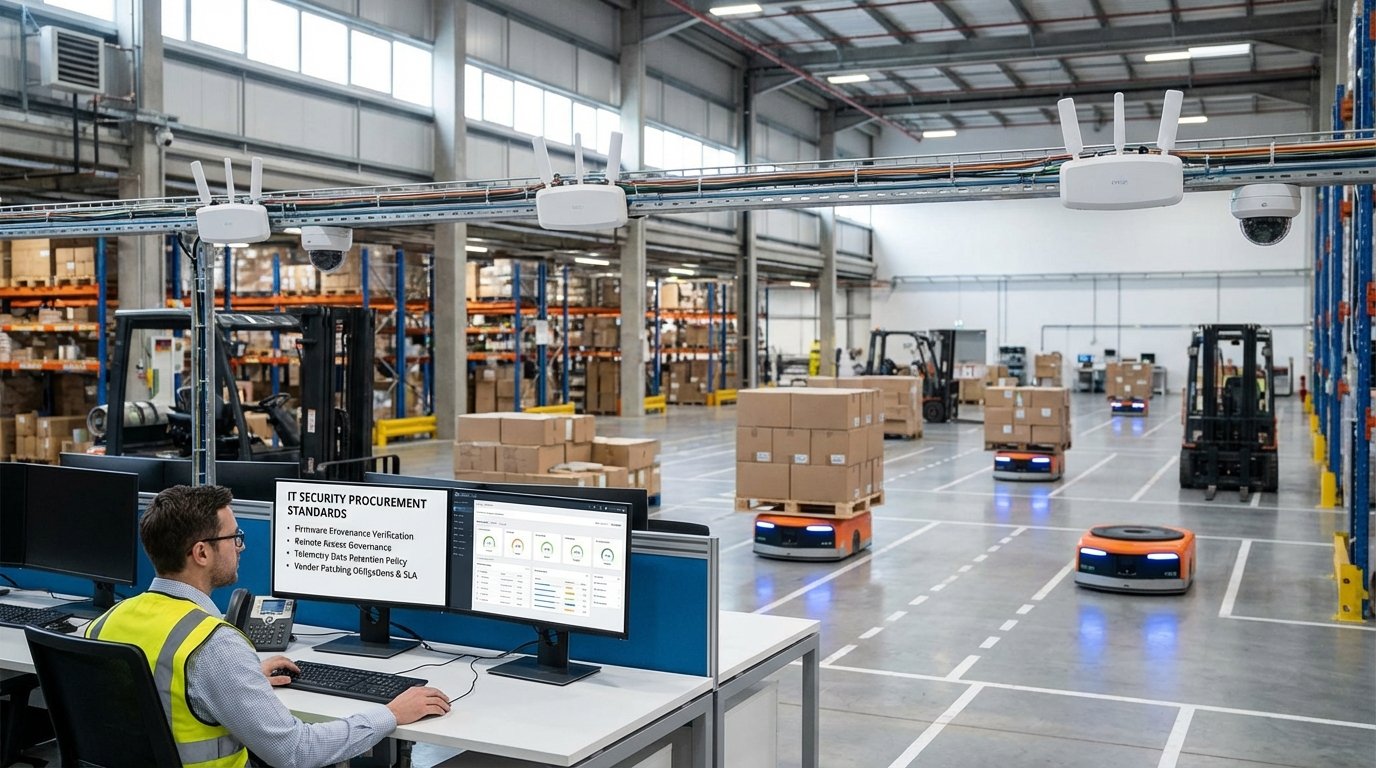
The robotics security conversation tends to sound like a technical standards argument. In real organizations, it’s becoming a procurement power argument.
U.S. robotics firms are pushing Congress for stronger security and procurement barriers around Chinese robot suppliers. Meanwhile, robot-dog patrol deployments in data centers show how quickly connected machines are entering sensitive operating environments. The security posture is usually decided before install day, during sourcing and contract language.
A robot isn’t just another endpoint. It combines mobility, sensors, remote management, software updates, and often cloud-linked control logic. If trust fails, the consequences are both digital and physical. Procurement choices define what telemetry is collected, where it flows, who can push commands, and how quickly access can be cut in an incident. Those are security controls, not legal footnotes.
There’s also the civil-liberties angle, and it belongs in the same room. If security teams verify firmware integrity but ignore surveillance impact, they import legal and reputational risk. If policy teams focus on ethics language but skip technical assurance, they invite preventable incidents. One control surface.
Mature robot procurement needs supply-chain trust evidence across hardware, firmware, and update channels. Data-boundary guarantees for video, location, and operating telemetry. Administrative safeguards including role separation and emergency disable paths. Lifecycle commitments for patching and vulnerability disclosure. And use-policy guardrails aligned to privacy expectations.
If a vendor can’t answer those questions before purchase, you’re buying uncertainty.