
John Z Black
Brunswick, ME • (207) 245-1010 • contact@johnzblack.com
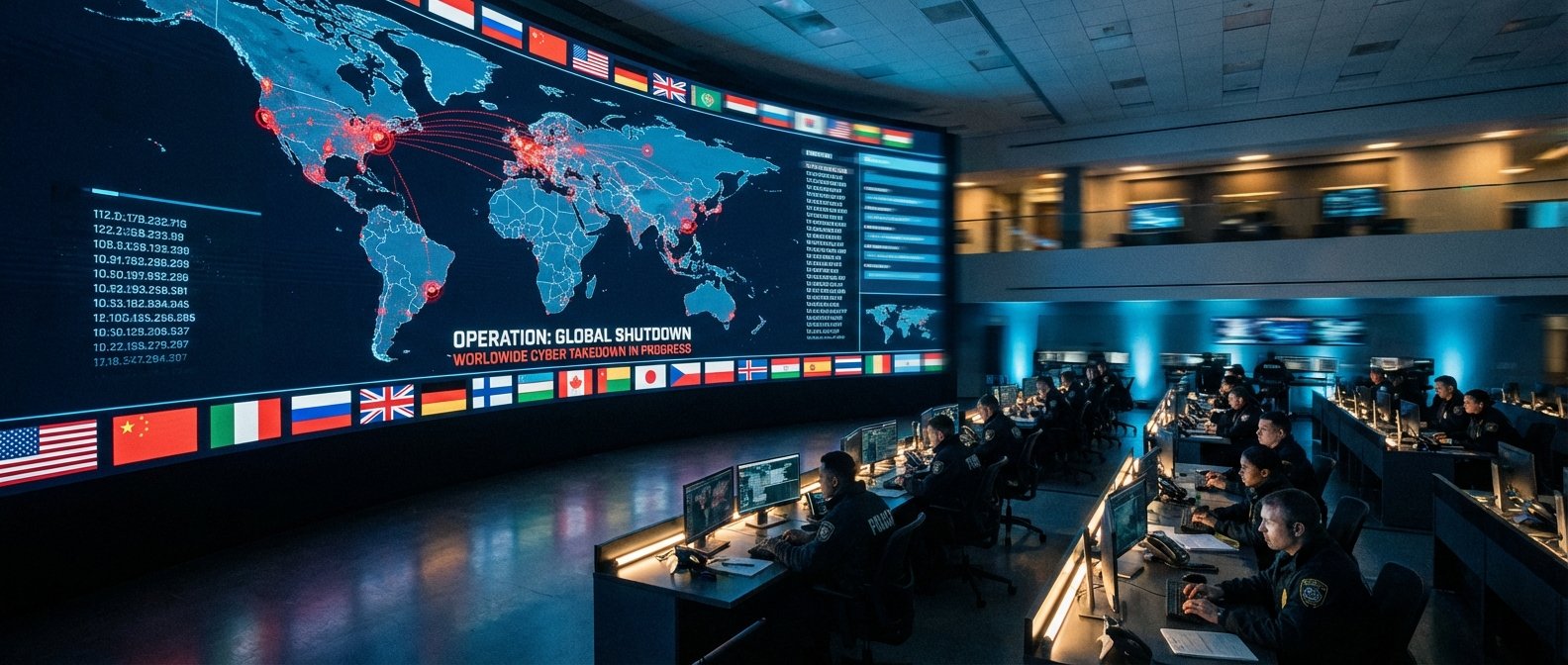
Interpol just wrapped Operation Synergia III and the numbers are not modest: 45,000 malicious IPs sinkholed, 94 arrests, 110 more suspects under active investigation, 212 servers seized, 72 countries coordinating for six months straight.
That’s not a press release dressed up as a takedown. That’s a sustained campaign.
The operation targeted phishing infrastructure, ransomware networks, and fraud operations globally. One detail worth noticing: 40 of the 94 arrests came from Bangladesh alone. That matters because Western-led cybercrime operations often end up looking like Western operations, with arrests concentrated close to home. Synergia III followed the infrastructure to where the operators actually were.
This is also the third time. Not Synergia. Not a sequel. Three coordinated operations, each building on the last. The first proves it’s possible. The second proves it wasn’t luck. By the third, you’ve got something that looks like institutional capacity.
The enforcement math is getting harder for criminal operators. Running phishing and ransomware at scale leaves a traceable surface, and the gap between “traceable” and “prosecuted” is closing. Not closed. Closing.
Infrastructure seizures without arrests are speed bumps. Tycoon2FA recovered in 19 days (more on that separately). Synergia III went further: 94 actual arrests with 110 investigations still running. Arrests are what break operational continuity. People in custody take longer to replace than servers.
Seventy-two countries sustaining a coordinated operation for six months and producing real results is a model that’s working well enough to run a third time. That should make the risk calculus for anyone running criminal infrastructure a bit less comfortable.